
Pregnancy changes quickly. Scheduled visits cannot carry the full monitoring workload.
Pregnancy compresses diabetes management into a narrow, high-stakes window. Glucose patterns can shift week to week, targets are pregnancy-specific, and care teams need to find high-risk trends and missing data quickly.
Patients are also carrying a substantial daily workload—testing, logging, interpreting readings, and worrying about whether a number requires action. The workflow should make that effort more useful for both patients and clinicians, not add another layer of manual data entry and analysis.

See the pregnancy cohort, surface risk, and stay connected.
The GestationalCare module configures GlookoCare for pregnancy-specific diabetes management. Teams can triage the pregnancy population at a glance, surface fasting highs, post-meal highs, and missing data, and review readings against pregnancy targets.
Secure engagement, call requests, and remote education help close the gap between scheduled appointments.
Capabilities built around diabetes in pregnancy.
Pregnancy population view
Triage the full pregnancy cohort and
prioritize who needs attention.
Fasting and post-meal review
Review glucose by testing period
against pregnancy-specific targets.
Adherence signals
Surface patients who fall below testing targets or stop tracking.

Pregnancy risk alerts
Flag high-risk trends such as
fasting highs, post-meal highs,
and missing data.

Patient logging and engagement
Support device syncing, meal tagging,
daily context, secure messaging,
and education through
the GlookoConnect App.

Postpartum transition
Preserve records and support the
transition to long-term follow-up
after delivery.
One workflow across the full diabetes-in-pregnancy population.
GestationalCare supports gestational diabetes (GDM), pre-existing Type 2 diabetes in pregnancy, and Type 1 diabetes in pregnancy.
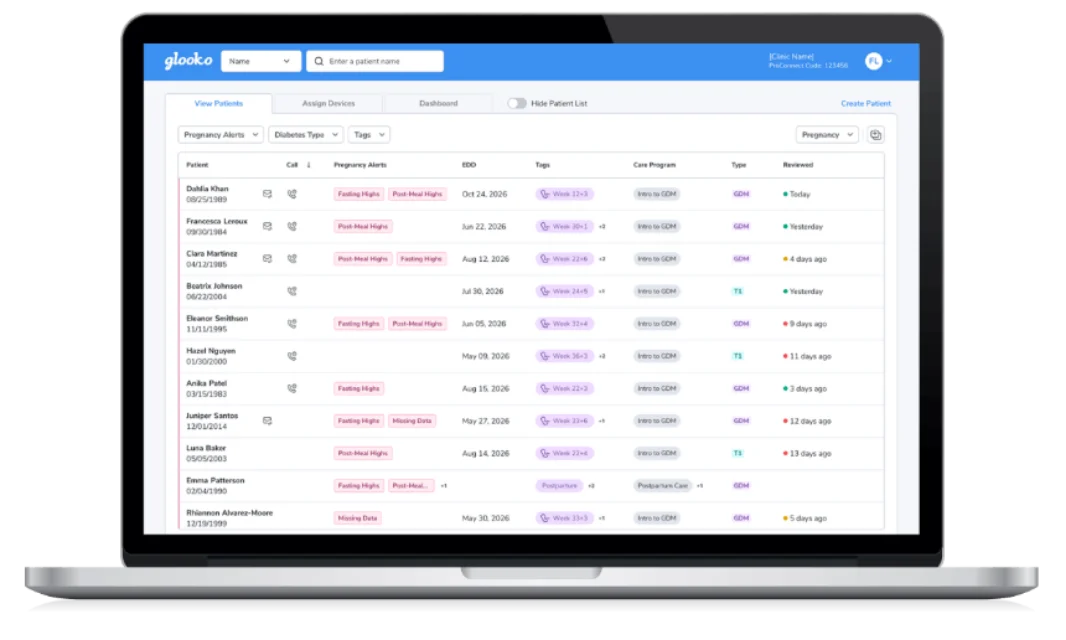

How GestationalCare fits the enterprise strategy.
Health systems can standardize the pregnancy diabetes pathway while using the same ambulatory foundation for device data, patient engagement, and population management.