

 Every year, the American Diabetes Association (ADA) updates its Standards of Care in Diabetes, the clinical foundation that guides how we screen, diagnose, manage, and support people living with diabetes. The 2026 guidelines are among the most comprehensive to date, with a clear message: diabetes care must evolve to meet rising complexity, widening gaps in care, and the growing urgency to improve outcomes across entire populations.
This year’s recommendations underscore that our work in connected care has never been more important.
Population health requires stronger systems, better data, and integrated teams
The Standards highlight that population health is not simply a measurement framework, but rather a commitment to improving outcomes for groups of people who experience very different barriers, risks, and trajectories. The ADA emphasizes team-based, patient-specific care, timely treatment decisions, reliable data metrics to track quality, and a culture of continuous improvement across health systems.
These priorities mirror what clinicians experience every day: fragmented systems, variable follow-up, and the challenge of navigating high-risk patients without the right tools or insights. Platforms like Glooko, which provide timely insights, structured data access, clinical integration directly into the EHR, and simplified workflows, play a direct role in enabling the proactive care models the ADA calls for. When healthcare professionals manage a large population of patients with diabetes, they often lack a clear, organized, and comprehensive view of patients’ pertinent health data.
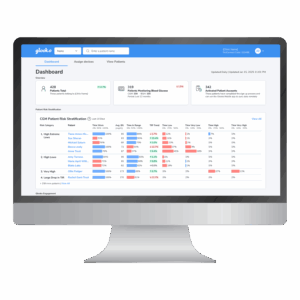 To help address this challenge, we designed the new clinic dashboard in the Glooko diabetes management platform. This is critical in providing insights into metabolic factors and indications of clinical risk to facilitate shared decision making conversations in a personalized way, with patients and their support systems.This patient-centric approach helps healthcare providers–including primary care providers, endocrinologists, and nurses, at hospitals, health systems, and clinics–provide individualized care recommendations that are patient-specific.
The Population Metrics section of the new Glooko clinic dashboard helps care teams understand the overall health and engagement of their clinic’s patient population in a centralized and concise view. By centralizing population-level metrics, care teams can more quickly identify disengaged patients, prioritize outreach, and intervene earlier, supporting both quality goals and clinic efficiency.
Glycemic management is becoming more nuanced and more actionable
 The 2026 Standards reinforce the importance of individualized glycemic assessment. A1C remains central, but ADA again stresses the clinical value of time in range (TIR), time below range (TBR), and continuous glucose monitoring (CGM) metrics for real-time, person-centered care. We observed similar trends in our 2025 Annual Diabetes Report.
For many clinicians, the challenge is not whether to use CGMs, it’s how to interpret data efficiently and translate trends into action. This is where connected, device-agnostic platforms are essential. Having glucose data delivered in clinically meaningful formats, integrated with insulin dosing, meals, and activity, allows teams to identify risks earlier, adjust therapy faster, and support patients between visits.
This is especially critical for populations highlighted in the Standards: individuals facing food or housing insecurity, young adults with rising complication rates, rural communities with limited access, and older adults with shifting needs. Digital tools do not replace clinicians; they expand their reach.
Inpatient glycemic safety: Operationalizing the ADA’s call for safer insulin use
 The 2026 Standards dedicate significant space to preventing hypoglycemia, hyperglycemia, and hyperglycemic crises, events that disproportionately impact people with diabetes during hospitalization or acute illness. ADA guidance reinforces the need for:
- Structured insulin protocols
- Frequent monitoring to adjust dosing
- Systems that minimize variation in clinical decision-making
- Approaches that reduce risk during periods of physiologic instability
This is exactly where EndoTool, developed by Monarch Medical Technologies, a Glooko Company, plays a transformative role. EndoTool brings advanced, patient-specific insulin dosing to inpatient settings, enabling dynamic adjustments based on each patient’s evolving physiology. By reducing glycemic variability and supporting timely identification of trends, EndoTool aligns directly with ADA recommendations around individualized glycemic targets, hypoglycemia prevention, and safer transitions of care.
As health systems work to connect inpatient and outpatient data streams, as the Standards increasingly encourage, EndoTool and Glooko have the potential to create a more actionable ecosystem. Patients leave the hospital with a more stable glycemic trajectory, and outpatient teams gain a clearer picture of what occurred during admission, supporting smoother recovery and reduced readmissions.
A vision aligned with where diabetes care is going
Across all 2026 recommendations, a single theme stands out: better outcomes depend on proactive, connected, team-based, data-driven care. The Standards call for more timely therapy changes, broader Diabetes Self-Management Education and Support (DSMES) access, stronger telehealth offerings, and improved system-level accountability.
At Glooko, we’re proud to support clinicians and health systems in delivering on those goals by making diabetes data easier to use, helping teams coordinate more effectively, and empowering people with diabetes with insights that fit their daily lives.
The work ahead is significant, but the path is clearer than ever. Together, we can turn these standards into sustained, measurable improvements in the health of patients and the clinician experience.
EndoTool is developed and marketed by Monarch Medical Technologies, a Glooko Company. EndoTool is an FDA-cleared Class II medical device indicated for inpatient use as described in its Instructions for Use. Glooko’s diabetes management platform and EndoTool are currently independent solutions.