


This blog post features contributions from Glooko’s clinical team., including Amanda Edwards, BSN, RN, Amanda Heger, MSN, RN, AMB-BC, Christine Emery, BSN, RN, CCRN, Paul Chidister, MD, FACP, and Marc Clements, MD, PhD
As clinicians and health system leaders, you understand the critical nexus of diabetes and cardiovascular risk — a dual-threat that often dictates patient morbidity and mortality.
Both the American Heart Association (AHA) and the American Diabetes Association (ADA) identify diabetes as a powerful, controllable risk factor, noting that adults with diabetes are two to four times more likely to die from or develop these conditions ¹. Uncontrolled blood sugar is a major risk factor, making this link impossible to ignore, especially when cardiovascular disease causes roughly 65% to 75% of all-cause mortality in people with type 2 diabetes ².
Our digital health solutions, the EndoTool Glucose Management System, developed by Monarch Medical Technologies, a Glooko Company, and the Glooko diabetes management platform, are designed to support this complex relationship, providing a clear and efficient pathway to monitoring diabetes data and potentially protecting your patients’ hearts.

EndoTool: Ensuring Inpatient Glycemic Stability and Supporting Cardiovascular Health
 For critically ill patients recovering from acute cardiac events (myocardial infarction, heart failure, and post-surgery), safe, precise, and stable inpatient glucose management is crucial for minimizing complications, accelerating recovery, and ensuring discharge readiness. The dynamic ICU and cardiac step-down environments require a highly precise, algorithmic solution aligned with critical care protocols, such as those from the Institute of Critical Care Medicine (ICCM)⁶.
When patients recovering from acute cardiac events present with co-morbidities like acute kidney injury (AKI), standard insulin protocols prove insufficient to safely support altered renal function as this drastically impacts insulin clearance. EndoTool is engineered to navigate this metabolic complexity through the use of 11 patient-specific proprietary factors. These factors allow the system to create a truly individualized insulin management profile that accounts for:
- Renal Function: Adjusting for altered insulin clearance in AKI.
- Insulin Sensitivity and Resistance: Recognizing the significant variability in patient response.
- Glycemic Trajectory: Assessing the rate and direction of glucose change to proactively prevent excursions.
The Science of Control: EREI & Tight Algorithms for Unmatched Safety

EndoTool’s Estimated Residual Extracellular Insulin (EREI) Calculation is a cornerstone of its safety and effectiveness. EREI accurately quantifies “insulin on board,” preventing dose compounding, a common cause of hypoglycemia in traditional protocols. This sophisticated estimation ensures precise, effective, and critically safe patient-specific dosing.
Preventing Hypoglycemia Before It Starts
Hypoglycemia is not just a complication; it is an independent risk factor for adverse cardiovascular events, including arrhythmias and increased mortality³,⁵. EndoTool’s design could help actively mitigate this risk factor:
- Engineered to Reduce Dual-Risk: EndoTool’s tight control algorithms are specifically engineered to help minimize both severe hyper- and hypoglycemia.
- Proof of Safety: Its algorithms achieved aggressive glucose targets with an unmatched safety profile: severe hypoglycemia (BG < 40 mg/dL) occurred in only 0.13% of all blood glucose readings in an ICU study ⁴.
- Proactive Carbohydrate Recommendations: When a rapid glucose decline signals impending hypoglycemia, the system not only holds the next insulin dose but also actively recommends supplemental carbohydrate intake. This proactive intervention stabilizes glucose before it reaches a dangerous threshold.
Case Study Snapshot: Atrium Health Wake Forest Baptist
Effective, stable inpatient glucose control is crucial for successful patient recovery and transition to outpatient care, supporting long-term glycemic targets and preventing readmission.
A large-scale retrospective analysis involving Atrium Health provided powerful evidence of EndoTool’s impact on reducing severe hypoglycemia with only 15 episodes in a year ⁸. Atrium Health conducted smaller-scale studies that demonstrated decreased length of stay, cost savings, and reduced time to control.
The Outpatient Edge: Continuous Diabetes Data in Glooko Useful for Heart Protection
 While EndoTool focuses on acute inpatient stabilization, Glooko provides the essential, continuous digital health platform required for effective long-term diabetes management.
Glooko’s strength lies in its agnostic device compatibility with more than 200 diabetes and health monitoring devices and apps creating a unified view of the patient’s health far beyond just glucose readings. This holistic data aggregation allows monitoring diabetes data for cardiac risk factors such as:
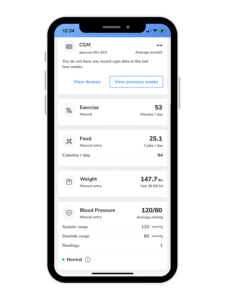
- Agnostic Integration of Biometric Data: Glooko seamlessly integrates readings from various connected health monitoring devices, including blood pressure (BP) monitors and smart scales. By tracking BP and weight trends over time, the platform provides clinicians with blood pressure and weight data — two primary, modifiable risk factors for cardiovascular disease. When this health data is integrated into the EHR and viewable alongside other patient data, clinicians can monitor these factors for cardiovascular disease.
- Nutrition and Lifestyle Management: The platform supports patient-entered nutrition logs and activity data. Clinicians can use this detailed lifestyle information to provide precise, personalized counseling on diet and exercise, directly supporting the lifestyle management required to reduce cardiac-related risks, such as hyperlipidemia and insulin resistance.
Risk Stratification: Using Glucose Data to Support Vascular Protection
Sustained poor glycemic control is the primary driver of both microvascular and macrovascular complications⁷. Glooko uses comprehensive, aggregated glycemic data to empower risk monitoring and population management:
- Identifying High-Risk Glycemic Patterns: The platform utilizes advanced pattern recognition algorithms to identify consistent trends in high glucose variability and poor Time in Range (TIR). These metrics are essential for assessing a patient’s overall risk for micro- and macrovascular complications.
- CGM Risk Stratification and Focused Care: For clinics managing large populations, Glooko’s data visualization allows for CGM risk stratification. By quickly identifying patient cohorts with persistently low TIR or high glycemic variability (GV), healthcare providers can efficiently focus their clinical resources and outreach efforts on the specific populations who are at the highest immediate risk of adverse cardiovascular outcomes.
Final Word: A Unified Approach to Preventing Complications

In observance of February’s American Heart Month, the capabilities of EndoTool and Glooko support effective glucose management, which is recognized as an important element of diabetes care and overall cardiovascular health.
EndoTool’s core strength is its 11-factor algorithm and EREI calculation for safe, precise, and effective inpatient glycemic control, which is vital for accelerating care transitions and improving long-term health. Glooko’s comprehensive digital outpatient tools, including pattern recognition in the Glooko Patient Summary and lifestyle data integration, provide actionable data for clinicians, empowering patients to maintain glycemic targets, and potentially prevent macrovascular and microvascular risk factors complications.
Together, these technologies support a continuous, data-driven approach to diabetes care, which can contribute to an important element of overall cardiovascular health and further the mission of heart health.
References
- American Diabetes Association. (2024). Standards of care in diabetes—2024. Diabetes Care, 47 (Supplement 1). https://diabetesjournals.org/care/issue/48/supplement_1
- American Heart Association. (n.d.). Diabetes significantly increases risk of heart attack, stroke. DeTar Healthcare System. Retrieved February 2, 2026, from https://www.detar.com/news-room/diabetes-significantly-increases-risk-of-heart-att-21990
- Buse, J. B., Ginsberg, H. N., Bakris, G. L., Clark, N. G., Costa, F., Eckel, R., Fonseca, V., Gerstein, H. C., Green, L. A., Konstam, M. A., Lorenzi, F., Materson, J. R., Mitchell, M. E., Smith, S. C., Jr., Pasternak, R. C., Reusch, J. E., Sacco, R. S., Smith, E. H., Vitek, M. E., & Zheng, D. (2010). Cardiovascular disease and diabetes: An update. Circulation, 122(3), e320–e334. https://pmc.ncbi.nlm.nih.gov/articles/PMC3028955/
- Cochran, S., Miller, E., Dunn, K., Burgess, W., Miles, W., & Lobdell, K. (2006). EndoTool software for tight glucose control for critically ill patients. Critical Care Medicine, 34(12), A68.
- Grundy, S. M. (2019). Obesity, cardiovascular disease, and the American Heart Association. Journal of the American Heart Association, 8(12), e011295. https://www.ahajournals.org/doi/10.1161/JAHA.118.011295
- Institute of Critical Care Medicine. (n.d.). [Specific guideline title related to glycemic control in critical care]. Retrieved February 2, 2026, from https://www.youtube.com/watch?v=aNpMzL1FLmU
- Laakso, M., & Lehto, S. (2014). Contributors to mortality in high-risk diabetic patients. Diabetes Care, 37(10), 2798–2804. https://diabetesjournals.org/care/article/37/10/2798/30903/Contributors-to-Mortality-in-High-Risk-Diabetic
- Price, C., & Aloi, J. (2024). Achieving Optimal Glucose Control in Critical Care Units at Atrium Health [Poster presentation]. American Diabetes Association 84th Scientific Sessions.
EndoTool is developed and marketed by Monarch Medical Technologies, a Glooko Company. EndoTool is an FDA-cleared Class II medical device indicated for inpatient use as described in its Instructions for Use. Glooko’s diabetes management platform and EndoTool are currently independent solutions. Patient-specific refers to EndoTool’s ability to use available patient information within the hospital’s electronic medical record to provide individualized insulin dosing recommendations. Recommendations are intended to assist, not replace, clinical judgment. All treatment decisions remain the responsibility of the licensed healthcare provider.