


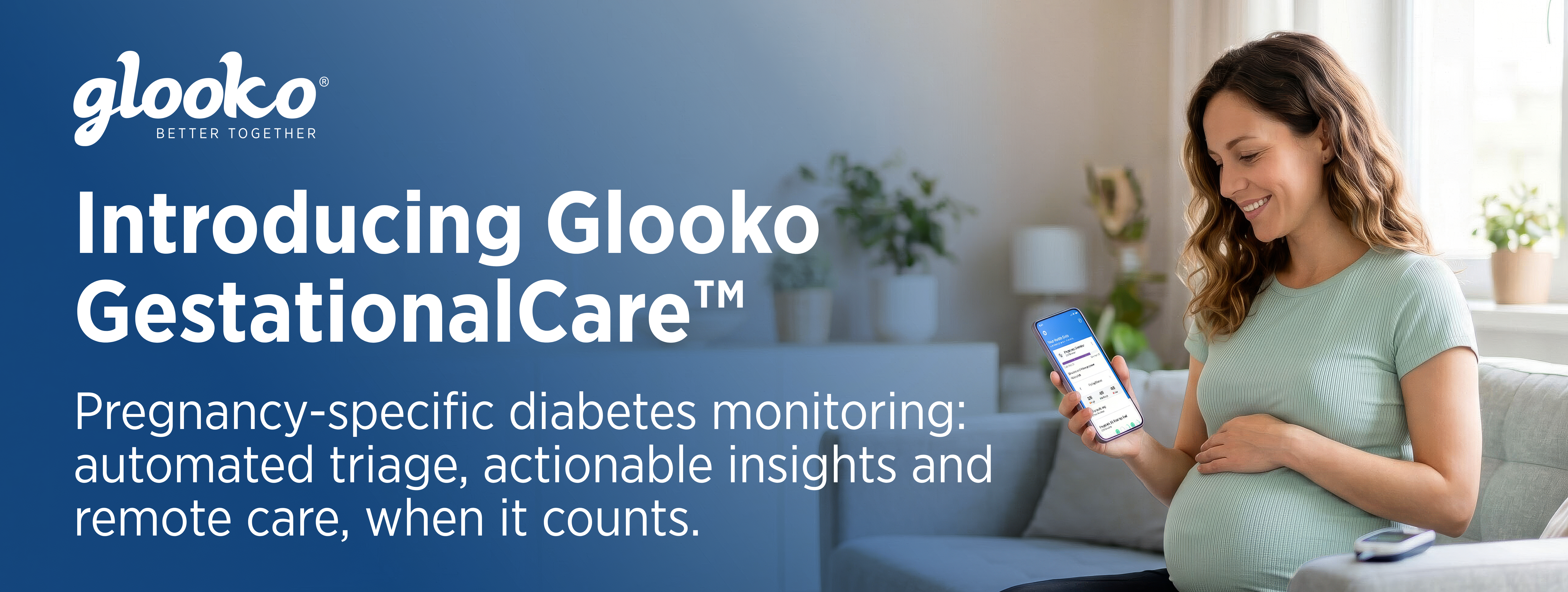
Diabetes in pregnancy is one clinical pathway, but it is not one clinician’s job. With Glooko GestationalCare, we connect distinct specialists around shared information, clear responsibilities and timely escalation.
Today, we’re excited to announce U.S. availability of Glooko GestationalCare, our new pregnancy-specific diabetes management module within the ambulatory GlookoCare platform. We designed GestationalCare around a simple observation: diabetes in pregnancy may be one clinical problem, but it is rarely one clinician’s job. The workflows also look distinctly different in pregnancy care than they do for non-pregnant individuals.
An individual diagnosed with gestational diabetes may begin with her OB/GYN, receive nutrition counseling from a registered dietitian, learn glucose monitoring from a diabetes educator and later be referred to maternal-fetal medicine if advanced treatment or monitoring becomes necessary. An individual entering pregnancy with Type 1 or Type 2 diabetes may be co-managed from the beginning by obstetrics, maternal-fetal medicine and endocrinology, with nurses and diabetes educators providing frequent support between appointments. The roles change based on the individual, the type and complexity of diabetes, and the particular resources of the healthcare organization. The need for timely, shared information does not.
That reality shaped how we approached GestationalCare.
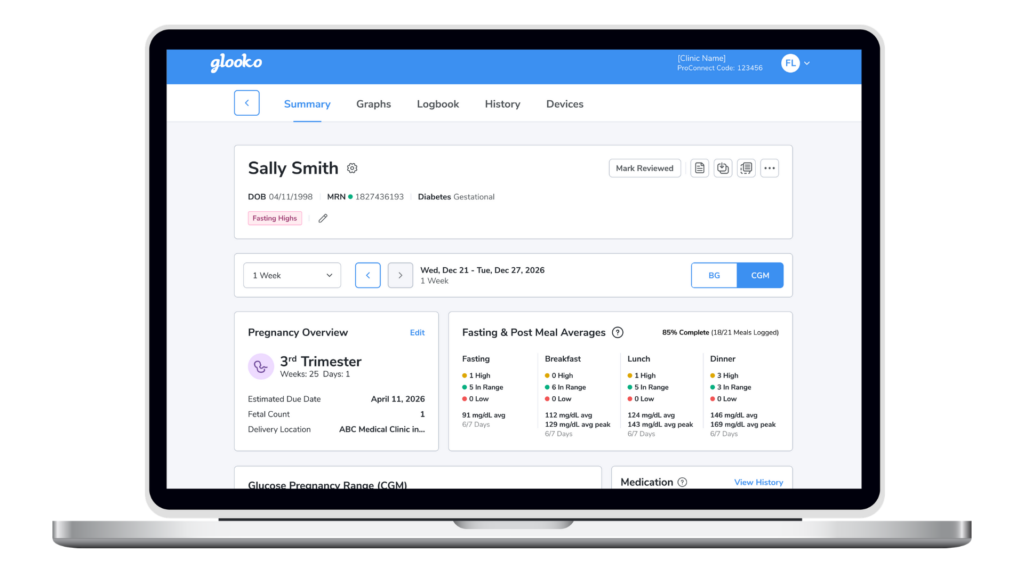
 We built a pregnancy-specific module within GlookoCare—the outpatient diabetes platform care teams may already use to review device data, manage populations and engage patients between visits. GestationalCare configures that platform around the compressed timelines and specialized clinical needs of pregnancy. And importantly, it was designed for the team around the pregnancy, not just one specialty.
The problem is not a shortage of clinical expertise within the care team. It is that the information, ownership and next action can become separated as the patient moves from one specialist to another.
The pathway changes with the clinical situation
A shared workflow should begin by recognizing that diabetes in pregnancy is not one uniform experience. A pregnant individual newly diagnosed with gestational diabetes may first need nutrition counseling, meter education, and a clear plan for fasting and post-meal testing. Another individual may enter pregnancy with Type 1 diabetes, an insulin pump, and CGM data that require frequent review. A third may have Type 2 diabetes and need coordinated attention to treatment, fetal surveillance, and delivery planning.
The clinical pathway must flex without becoming a collection of disconnected processes. It should allow the OB/GYN to remain the coordinator of prenatal care, give maternal-fetal medicine and endocrinology the context needed for higher-risk or more complex cases, and support the dietitians, diabetes educators and nurses who often carry the high-frequency work between appointments.
The mistake is to force every patient and every role into the same generic workflow. The better approach is to create one shared digitally supported care model with different entry points, responsibilities and views. That is where Glooko GestationalCare comes in.
Organize work around clinical priority, not the order in which data arrives
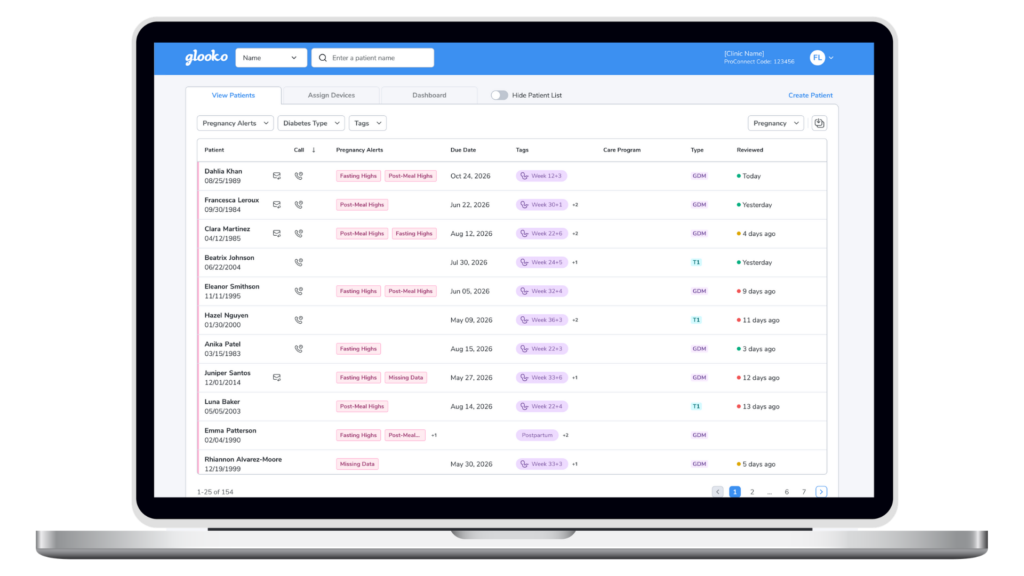
 Many traditional workflows are organized around submission of fragmented data and documentation methods. The team then reviews records in the order they were received, even when the patients with the most urgent needs are not the first in the queue.
A pregnancy-specific population view can help the team begin with a different question: who may need attention now? Configured signals such as fasting highs, post-meal highs, missing data or a patient-requested call can help organize the review process. They do not replace clinical judgment or make treatment decisions. They help clinicians apply that judgment to the patients and patterns most likely to require it.
This creates a more useful division of labor. Diabetes educators and nurses can focus on adherence, education and incoming questions. Dietitians can review meal context and nutrition-related patterns. OB/GYN, maternal-fetal medicine and endocrinology teams can assess the patients whose information suggests that the current care plan or level of specialty involvement may need to change.
Postpartum is part of the pathway
Delivery is a major clinical transition, but it should not become the point where the diabetes record and care team connection disappear. The workflow should define how pregnancy history is preserved, how the patient moves into a postpartum state, which types of care are needed in the postpartum period, and which team owns the next handoff.
For a person with pre-existing Type 1 or Type 2 diabetes, that may mean a rapid transition in insulin needs and renewed coordination with endocrinology. For a person with gestational diabetes, it means supporting appropriate long-term follow up rather than treating delivery as the end of the story.
Designing postpartum continuity from the beginning makes the pathway more coherent for clinicians and more understandable for patients.
Glooko GestationalCare: A platform to support your operating model
GestationalCare is designed to help maternal-fetal medicine, OB/GYN, endocrinology, diabetes education, nursing and nutrition teams work from a clearer pregnancy workflow while preserving their distinct responsibilities.
The module brings together a pregnancy population view, fasting and post-meal review, adherence signals, configured pregnancy alerts, secure patient engagement and postpartum transition. Supported mobile workflows can include device syncing, logging, meal tagging, goal tracking and education.
The larger value is not simply another way to collect glucose values, rather, it is a more structured way to connect the people, information and decisions that make up diabetes-in-pregnancy care on one unified platform designed for the unique needs of care teams and patients.